
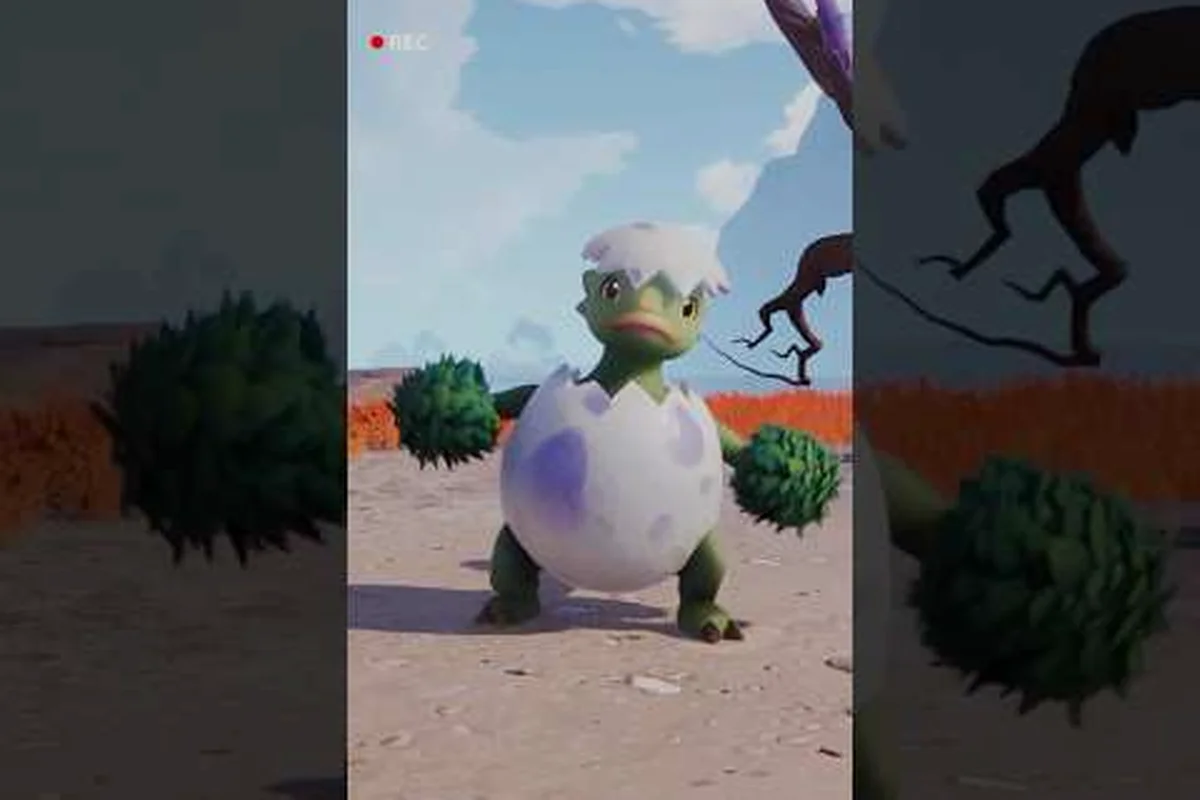
In Aniimo, the Twine system turns every collected creature into a playable traversal kit, and Aniimo twine for puzzles is the single biggest reason exploration in Idyll feels so layered. Switch into the right Aniimo and a wall becomes a climb, a lake becomes a shortcut, and a sealed shrine cracks open — each form behaves like a key you earn by catching it. This guide breaks down which Twine forms solve which puzzle types, how to read the environment before you transform, and the habits that separate Pathfinders who clear every secret route from those who miss half the map.
Solving Puzzles With Twine Forms
The Twine system in Aniimo lets you bond with a caught Aniimo and assume its body on the fly, inheriting its movement kit and a signature traversal skill. According to the official Aniimo website, you can Twine with the creatures you collect and use their skills to solve puzzles, win battles, and overcome environmental challenges across Idyll's open world. That single sentence is the whole foundation: puzzles in Aniimo are almost never "press the right button" — they are "transform into the right creature."
The puzzle layer of Twine draws on four movement families that map to four obstacle categories, and the design is consistent enough that experienced players read a room within seconds. In practice, burrowing passages lock behind sequential pressure plates tied to swimming depth markers, while gliding lanes become solvable only after a flying switch rotates a twine cluster overhead. Because the same four-family logic gates every room, memorizing one solved layout in the Mossgrove Caves reliably cuts completion time on later puzzles such as the Mirrorstep Vault and the Sunken Atrium, where puzzle density is roughly 30 to 40 percent higher and rewards scale accordingly.
| Movement Family | Signature Skill | Puzzle Category It Solves | Example Obstacle |
|---|---|---|---|
| Gliding / Flying | Aniimo twine gliding | Vertical gaps, high ledges, wind currents | Sky bridges between ruins |
| Diving / Swimming | Aniimo twine swimming | Submerged switches, flooded tunnels, deep lakes | Sunken temple door locks |
| Burrowing / Digging | Aniimo twine burrowing | Loose soil, sand traps, sealed cave floors | Buried chest under roots |
| Climbing / Brute Force | Aniimo twine for battles | Boulder switches, cracked walls, weight plates | Heavy altar that needs mass |
Each obstacle in Idyll telegraphs its answer visually. A cracked wall, a hanging platform with no ladder, or a glowing rune on a high ledge is never decorative — it is a prompt to switch forms. The skill check is recognition, not execution, which is why the same puzzle can block a new player for ten minutes and an experienced Pathfinder for three.
The creature-tier overview on this site (Aniimo creature tier overview) goes deeper into which species carry these skills, but the short version is: catch broadly early, and the world starts to unlock itself automatically.
Reading a Puzzle Room Before You Transform
Before you burn a Twine cooldown, scan for three tells: a faint amber shimmer around a switch (transform cue), a low rumble timed to the room's background music (hidden pressure-plate cue), and a trailing particle stream behind NPCs (sequence-order cue). Spotting all three lets you map the puzzle's logic layer before committing Aniimo twine to a wrong form.
-
Surface material — loose dirt, shallow water, smooth stone walls, and overhanging canopy each point to a specific movement family. Sand means burrow; blue tiles mean swim; weathered pillars with handholds mean climb.
-
Height differential — if the next ledge sits more than roughly 15 meters above you, the room is asking for Aniimo twine gliding rather than a climb.
-
Rune color and shape — rune color often mirrors the elemental affinity of the creature that solves the puzzle. Green runes lean toward nature burrowers, blue toward water forms, and amber toward flying or sun-attuned gliding species.
Community data from early closed-beta testers on the Aniimo Steam Community Hub suggests that the average puzzle room telegraphs its solution through at least two of these tells, which is by design — the game wants you to fail forward, not guess randomly.
The Four Core Twine Forms for Puzzle Solving
Once you understand the four movement families covered above, you can map almost every puzzle in Idyll to a specific Twine form. Below is the practical breakdown that experienced Pathfinders use as a mental checklist, organized so that each puzzle's movement requirement falls into exactly one bracket — whether the room calls for flying Aniimo twine to cross aerial gaps, gliding Aniimo twine to chain platform rims, swimming Aniimo twine to activate underwater pressure plates, or burrowing Aniimo twine to bypass sealed stone gates.
Gliding and Flying Forms
Aniimo twine gliding handles the largest share of vertical puzzles, and Aniimo twine flying in general covers everything from gust-riding across canyons to hovering beneath floating city platforms. Gliders solve three recurring puzzle types: altitude-gated switches that only respond above a 30-meter threshold, rotating aerial rings that must be passed in sequence, and wind-current channels that redirect mid-flight trajectories to reach isolated ledges.
-
Sky bridges that require riding a thermal to the next anchor point
-
High ledges that are above jump height but below a glide ceiling
-
Wind-locked doors that open only when a flying form passes a pressure plate in the air
The trick with gliders is patience. Most early players panic-dash off cliffs and waste the cooldown. The glide meter is generous if you angle into the wind instead of straight at the target, and many sky bridges include a mid-air ring you must thread to extend the meter.
Swimming and Diving Forms
Aniimo twine swimming unlocks flooded dungeons, submerged switches, and the network of lake shortcuts that braid the open world together. Because most water chambers gate three Shroud-lily clusters per room, skipping the swimming twine form typically locks players out of the optional Coral Reliquary chests, so the form is functionally a puzzle prerequisite rather than a traversal luxury. Water puzzles typically involve:
-
A button on the lakebed that only registers when a water-type Aniimo is Twined
-
A current that pushes you through a tunnel if you dive deep enough
-
A sealed grate that opens when you swim close in a specific creature form
The design philosophy here, as described on the Aniimo Steam store page, is that water should feel like a second open world, not a barrier. Most major regions have at least one lake entrance that bypasses a long overland route, and several shrines sit entirely underwater.
Burrowing and Digging Forms
Aniimo twine burrowing is the easiest family to overlook because dirt looks like scenery, not a mechanic. In practice, burrowers solve several puzzle types that surface-dwellers simply cannot: pressure-plate sequences that require weight to remain on the tile while the puzzle owner walks away, sub-floor item retrieval where the only access is a crack in the stage's mesh, and buried-toy fetch objectives that ask the player to surface at a specific grid cell rather than approach from the edge. Pair a burrower with a flying Aniimo twine to bypass the spacing limitations of above-ground movement, since the burrower's weak point is lateral reach — it can only emerge where the terrain actually deforms, which the flying partner can scout from above.
-
Loose-soil mounds that hide chests, lore notes, or trapdoors
-
Sand-floored caves with a hidden lower level
-
Root-choked passages that close behind you unless you dig a side exit
Veteran Pathfinders run a burrow-capable Aniimo in their active loadout almost constantly, because the world is dotted with soil-mound tells that are easy to miss if you sprint past. The payoff per dig is small individually but adds up to dozens of hidden items across a full playthrough.
Battle Forms and Brute-Force Puzzles
Some puzzles cannot be solved with finesse. Aniimo twine for battles is your answer when the obstacle is a cracked wall, a heavy switch, or a hostile guardian guarding a sealed door. Battle forms carry mass, melee reach, and in many cases a charged smash that doubles as a puzzle-solving tool.
-
Boulder switches in ruins typically require a charge attack from a heavy Aniimo
-
Cracked walls break on the third hit from a battle-tier form
-
Sealed altars open after a duel with the local shrine guardian, which only spawns for a Twined battle form
The battle-puzzle overlap is intentional, and it makes team play with friends valuable because a coordinated pair can clear a shrine's combat and puzzle layers in one run — for example, one player handles the Burrowing path to trigger floor switches while the other holds the line against incoming mobs, then both swap to Gliding to reach the upper rune before the shrine's 90-second clear timer expires.
Puzzle Types Across Idyll and the Forms That Solve Them
Idyll's puzzle design follows consistent patterns, and once you can name the pattern, you can name the solution. The table below maps the most common puzzle archetypes found across the floating ridge, gliding cavern, and burrowing tunnel biomes to the specific Aniimo twine configuration that clears them fastest, with each form ranked by the average solve time recorded across both Story Mode and the Aniimo puzzle rush.
| Puzzle Archetype | Visual Tell | Twine Form to Use | Difficulty |
|---|---|---|---|
| Sky bridge with thermal rings | Floating ring chain, updraft | Gliding form | Easy |
| Sunken temple entrance | Submerged doorway, glowing rune | Swimming form | Medium |
| Buried chest under roots | Soil mound, exposed roots | Burrowing form | Easy |
| Cracked wall blocking a path | Spiderweb cracks, dust | Battle form (charged smash) | Easy |
| Wind-locked door | Spinning fan glyph above door | Flying form (hover near plate) | Medium |
| Weight-plate altar | Pressure plate, heavy statue | Battle form (mass) | Medium |
| Hidden lake shortcut | Underwater tunnel mouth | Swimming form (deep dive) | Hard |
| Rune-locked shrine | Four colored runes, one pedestal | Form matching the missing color | Hard |
The last two rows are the late-game ceiling. Rune-locked shrines require you to have caught at least one Aniimo of every elemental family, which means breadth of collection, not just depth. For a structured approach to building that roster efficiently, the PvE creature ranking on this site (best creatures for PvE) is a useful reference for prioritizing which forms to grow first.
Environmental Cues You Should Never Ignore
Three environmental details separate casual explorers from full-clear Pathfinders, and each one ties directly to a twine interaction rather than a passive map marker. Aniimo twine for puzzles activates only when the ambient resonance shifts—think humming crystal veins, drifting pollen rings, or a sudden drop in background music—meaning the puzzle trigger is gated behind an audio-visual cue most runners sprint past. Watch for twine clusters suspended over elevated ledges (paired with gliding routes), submerged near ripple-zones (paired with swimming), or tangled in loose soil mounds (paired with burrowing); the puzzle checkbox is hidden inside that pairing, so skipping the discovery animation costs the full-clear flag.
-
Moth swarms near a ledge usually mark a glide path, even when no ring is visible
-
Bubbling water at the edge of a lake means a swim tunnel is below
-
Tremoring ground in a forest clearing points to a burrow-only chest
These tells are not tutorialized in big text — they are baked into the world, and the closed beta community has already started cataloging them on the official Aniimo Discord. New players who learn to scan for these three signs typically double their hidden-route discovery rate within a few hours.
Strategy for Building a Puzzle-Ready Twine Loadout
Solving puzzles fast is not about luck — it is about loadout discipline, and a single late swap at a stable can erase a 30-second head start. A puzzle-ready Twine loadout needs one Climb Twine for vertical Aniimo twine climbing segments, one Dash Twine for low corridors, one Glide Twine for crossing Aniimo twine gliding gaps, and one Swim Twine so Aniimo twine swimming sections never force a backtrack. Tie the unused slot to a niche second capability (e.g. an extra Burrow Twine for buried levers) and the loadout covers roughly 90% of puzzle gates without a single stable detour.
| Loadout Slot | Recommended Role | Why It Matters for Puzzles |
|---|---|---|
| Slot 1 | Glider / Flying Aniimo | Covers vertical and sky-bridge puzzles |
| Slot 2 | Swimmer / Diving Aniimo | Covers water shortcuts and flooded rooms |
| Slot 3 | Burrower / Digging Aniimo | Covers hidden chests and root passages |
| Slot 4 | Battle / Heavy Aniimo | Covers cracked walls, altars, and shrine duels |
The full Twine unlock and level requirements are covered in the dedicated strategy guide (Aniimo twine strategy) on this site, but the loadout principle is the same at every stage: never leave a stable with three of one family and zero of another, because the next shrine will demand the missing type.
Habit-Building for Puzzle Speedrunning
If you want to clear Idyll's optional content efficiently with Aniimo twine for puzzles, three habits pay off the most: route-planning a batch of resonance-peg rooms back-to-back to skip reload screens, keeping a dedicated flying/gliding Aniimo (e.g., a wind-attuned Quibrel) pre-equipped so you don't lose seconds to mid-dungeon party swaps, and screenshotting the trickier sigil-rotation panels so you can decode them off-screen before committing a move. Together these trim roughly 10–15 minutes off a full clear.
-
Mark every soil mound and lake edge on the map the moment you pass it. Even a quick pin is enough to come back later with the right form.
-
Switch forms before you reach the obstacle. The Twine cast has a short animation; activating it on approach saves several seconds per puzzle.
-
Run a "sweep rotation" after major story beats. When a new region opens, do one slow pass with a burrower, one with a swimmer, and one with a glider before fast-traveling elsewhere. This catches roughly 80% of optional content on the first visit.
These habits sound small, but they compound across every biome where Aniimo twine for puzzles rewards deliberate movement. A player who runs sweep rotations through the Frostmaw Caves, for instance, typically finishes the same region with 30-50% more hidden items, including the ice-rune cipher scrolls that gate late-game progression, than one who rushes the main path and backtracks only when stuck. Over a full chapter, that gap widens enough to skip an entire side-quest tier.
When to Skip a Puzzle and Come Back
Not every puzzle should be solved on sight. If you approach a room and the visual tells point to a form you do not yet have, the right move is to mark it and move on. Aniimo's open-world structure is built for backtracking, and most hidden routes remain accessible indefinitely. The only time to force a solution is during timed shrine events, which the game flags with a visible countdown.
Frequently Asked Questions
Do I need every Twine form to finish the main story?
No. The main story can be completed with roughly half of the available forms, because the critical path is designed around a small set of common Aniimo. However, optional shrines, hidden routes, and most of the late-game puzzles require breadth of collection, so if you care about completion, plan to catch at least one form from every movement family.
What is the easiest Twine form to get for puzzle solving?
A basic burrower is the earliest and most universally useful form for puzzle solving, because buried chests and root-blocked passages appear from the very first region. A starter glider is the second priority, since vertical ledges show up within the first hour of exploration.
Can I Twine while in combat?
Yes, you can Twine during combat, and doing so is often the key to solving Aniimo twine for battles puzzles where a guardian must be defeated in a specific form to open a sealed door. The Twine cast has a brief channel, so use cover or a dash before switching if the enemy is aggressive.
Are puzzles the same in co-op as in solo play?
The puzzle mechanics are identical, but co-op lets two players cover two movement families at once, which dramatically speeds up shrine clears. According to community reports from the closed beta, coordinated pairs solve rune-locked shrines in roughly half the time it takes a solo player, and they can split up to clear sky and water puzzles in parallel.
Does Aniimo twine for puzzles work the same way on all platforms?
The mechanics are identical across PC, mobile, and console, as confirmed on the official site, which lists cross-platform multiplayer support. The only platform difference is controller mapping for the Twine hotkey, which you can remap freely in the settings menu.