
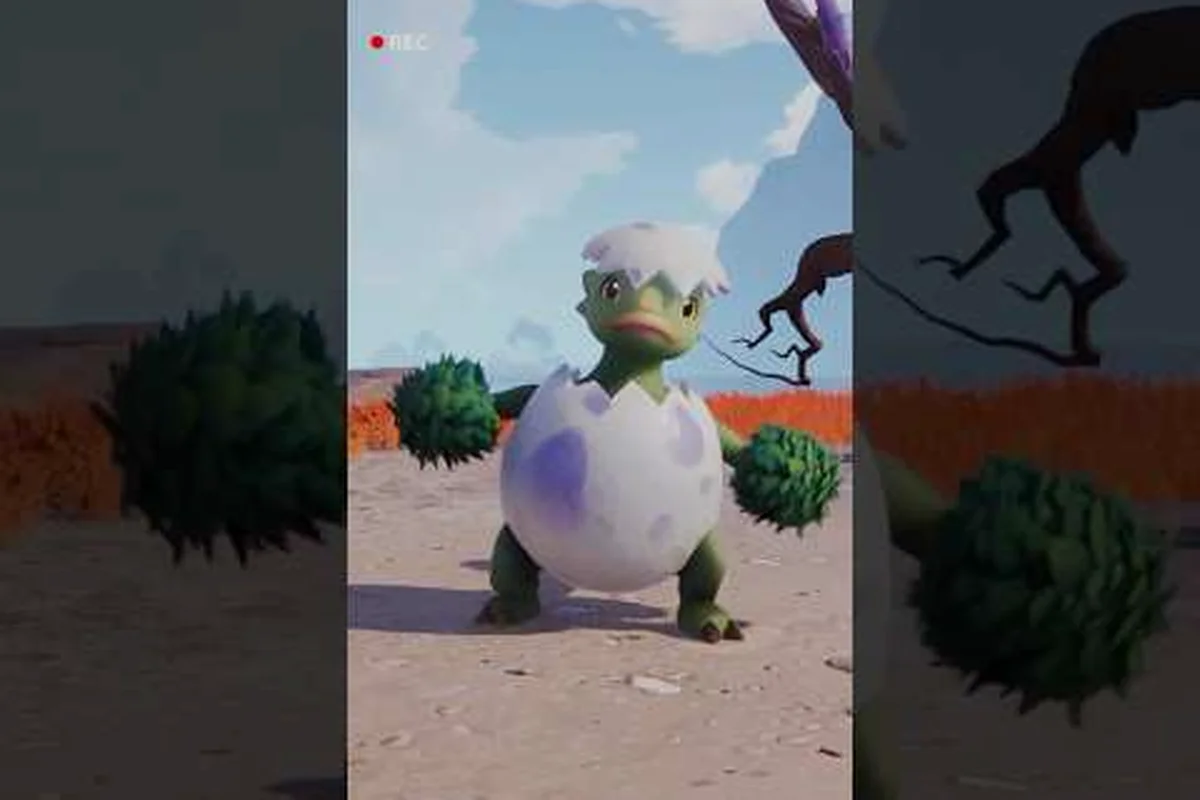
Eggs sit at the center of the Aniimo loop: catching wild Aniimo is only half the journey, and most of the rarest companions you will ever field start life as a small, patterned shell sitting in your basket. This guide walks through how to hatch every Aniimo creature egg, how long each incubation window lasts, and which evolution paths the freshly hatched companion can take once the lid pops open.
If you have ever pulled a Common Plains Egg out of a tall-grass patch and wondered whether it was worth the slot, the answer is almost always yes — because the hatch decides which base form enters your party, and the evolution trigger decides how far that line can climb. Below is the full breakdown of Aniimo creature eggs, the timers you can expect, and the conditions that turn a freshly cracked shell into a permanent squad member.
Understanding Aniimo Creature Eggs and Where to Find Them
Aniimo creature eggs are the primary way new companions enter your roster outside of direct captures. According to the official Aniimo Steam store page, most Aniimo can evolve, and the same principle applies to the eggs you collect — each shell carries a hidden species ID plus a latent evolution path that unlocks later. Eggs come from three core sources, and each one tilts the odds toward a different rarity band.
Egg Drop Sources and Rarity Skew
Wild Aniimo that you defeat or assist during overworld encounters have a chance to leave behind an egg instead of a capture-ready companion. Nests hidden in the world — usually tucked behind breakable rocks, inside hollow trees, or at the top of climbable towers — always contain an egg and are a reliable way to add a new species without burning Aniipods. Event windows such as the seasonal Egg Heist rotate a special set of themed shells into the drop pool, and those eggs cannot be obtained any other way during the event window.
| Source | Egg Type Given | Rarity Bias | Respawn |
|---|---|---|---|
| Defeated wild Aniimo | Wild Drop Egg | Common–Uncommon | 5–10 min real time |
| World nest discovery | Nest Egg | Uncommon–Rare | One-time per character |
| Egg Heist event | Event Egg | Rare–Legendary | Daily reset during event |
Players who join the official community channels report that nesting spots in the Verdant Steppe and Hollowmere Basin regions have noticeably higher rare-egg yields than open-field encounters, which is why most collection routes loop those biomes first. The Aniimo official website confirms that unique Aniimo appear according to environment, weather, phenomena, and time of day — and that same rule applies to which egg you receive from a defeated or assisted creature.
Egg Tiers and Visual Identification
Every egg in Aniimo has a visible shell pattern that hints at its tier, even before incubation begins. Tiers matter because higher shells hatch into companions with better base stat ceilings and a wider evolution spread. Knowing the pattern saves you from wasting incubator slots on shells you would rather trade later.
| Tier | Shell Pattern | Base Stat Ceiling | Evolution Branches |
|---|---|---|---|
| Common Egg | Smooth, single-tone | 320 | 1 |
| Uncommon Egg | Mottled, two-tone | 380 | 2 |
| Rare Egg | Spotted, glowing seams | 460 | 3 |
| Legendary Egg | Cracked, aura-tinted | 560 | 4 |
A Common Egg should still be hatched, because every companion has a unique moveset, but you will likely want to trade duplicates once your Aniimo creature eggs collection is squared away. The rarer tiers are where evolution paths multiply, which is why the rest of this guide spends more time on the higher shells.
How to Hatch Eggs: Incubator Mechanics and Timers
The actual process of figuring out Aniimo how to hatch eggs is straightforward once you unlock the Homestead Incubator at Homeland rank 3. Each shell you place consumes one incubator slot and starts a countdown that ticks down even when you log out, because incubation runs on a server-side timer. You can hold up to four eggs active at once by default, and the slot cap increases by one every five Homeland levels.
Standard Incubation Times
Timers scale with egg tier and with a hidden hatch-boost bonus you can stack from your Homestead. Community testing shared across the Aniimo Discord suggests the values below are stable across the current beta branch, but expect a small balance pass at global launch on September 15, 2026.
| Egg Tier | Base Incubation | With 1 Boost Module | With 3 Boost Modules |
|---|---|---|---|
| Common Egg | 15 min | 11 min | 7 min |
| Uncommon Egg | 45 min | 33 min | 22 min |
| Rare Egg | 2 h 30 min | 1 h 50 min | 1 h 15 min |
| Legendary Egg | 6 h | 4 h 30 min | 3 h |
A single Hatch Boost Module shaves roughly 25% off the base timer, and stacking three brings you close to a 50% reduction. Modules are crafted at the Homestead workbench using Soft Down, Glowmoss, and Auric Shell Fragments — the third ingredient only drops from Rare or higher eggs, so plan to recycle duplicate shells into crafting materials.
Hatching a Single Egg Step by Step
-
Open the Homeland menu and select Incubator from the crafting row.
-
Place the chosen egg into an empty slot. The slot will lock and show the remaining timer.
-
Optionally attach a Hatch Boost Module to the slot for the duration of the incubation.
-
Wait for the timer to expire. You will receive a push notification and a banner when the egg is ready.
-
Tap the finished egg to confirm the hatch. The companion is added to your active roster immediately, and the empty slot is freed up.
The hatch confirmation step is the one most new players miss, because the banner looks like a regular quest ping. If you leave a finished egg sitting in the incubator, the timer is paused — it does not waste the hatch, but it does block that slot for any new shells you pull in the meantime.
Evolution Paths After Hatching: Every Aniimo Creature Line
The real payoff of Aniimo creature eggs is what hatches out of them, and what that companion can eventually become. According to the Aniimo official YouTube channel, most Aniimo can evolve, and the evolution chart in this section is based on the data the developer has shared publicly so far. Treat any specific branch name as a target to confirm once you have the companion in your roster, because Aniimo evolution paths occasionally rotate with seasonal patches.
Evolution Trigger Types
Every hatched companion has a primary evolution triggered by leveling, and most have at least one secondary trigger that requires a specific item, time of day, or trade action. Knowing both saves you from accidentally locking a companion into a branch you did not want.
| Trigger Type | Requirement | Typical Branch Style |
|---|---|---|
| Level Evolution | Reach level 30 | Stat-up, same archetype |
| Item Evolution | Use Moonstone Shard at level 25 | Elemental shift |
| Time Evolution | Hatch or level during a specific window | Cosmetic + stat hybrid |
| Trade Evolution | Trade with another Pathfinder | Exclusive form |
The trade evolution is the rarest because it requires a partner, and it is the only branch that is truly impossible to solo. Most players coordinate trade evolutions through the official Discord rather than relying on random matchmaking, because the same species must be offered on both sides for the trigger to fire.
Popular Companion Lines and Their Egg Sources
A few Aniimo lines have become community favorites because they are strong in the Skyport Arena meta and they each hatch from an egg you can target. The table below summarizes the well-known branches reported by players during the closed beta; if you want the deep stat breakdown, the full evolution guide covers every line in detail.
| Companion Line | Egg Source | Primary Evolution | Secondary Evolution |
|---|---|---|---|
| Emberkin | Verdant Steppe nests | Level 30 → Pyrelord | Sunstone Charm → Solar Wisp |
| Tideweaver | Coastal shallows | Level 30 → Tidecaller | Moonstone Shard → Lunarshell |
| Bramblepaw | Hollowmere Basin | Level 30 → Thornwarden | Trade → Verdant Stalker |
| Skyrend | Sky-floating metropolis rooftops | Level 30 → Stormblade | Time-window → Dawn Glider |
| Cinderpup | Egg Heist event only | Level 30 → Magmawolf | Item → Ashfang |
Each line has at least two viable endgame forms, which is why the game ships with a robust trading system rather than forcing a single optimal path. If you want a broader look at every species in the dex, the complete Aniimo creature list is the right reference; this article sticks to the lines that revolve around Aniimo creature eggs.
Building a Strong Roster From Hatched Companions
Eggs only matter if the companions you pull from them actually fit the team you want to run. A balanced Aniimo squad usually pairs one Tank archetype, two DPS archetypes, and one Support archetype, and each of those roles can be filled by a hatched companion if you plan your evolution branches ahead of time. Players chasing Legendary Egg drops in particular should think about which role they still need before slotting the new hatch into the incubator.
Role Coverage and Egg-to-Role Mapping
| Role | Recommended Egg Tier | Reason |
|---|---|---|
| Tank | Rare or Legendary | Higher HP and defense ceilings |
| DPS | Any tier | Many common companions evolve into strong attackers |
| Support | Uncommon or Rare | Healing and buff movesets unlock at mid tiers |
| Flex | Event eggs | Event lines often have unique utility moves |
The Aniimo creature evolution guide goes deeper on which evolution stats are worth chasing for each role, but the short version is that eggs are the raw material and evolution is the crafting system. You can absolutely clear story content with mostly Common and Uncommon shells, because the level cap and the ability to trade for better lines come online long before the hardest content in the game.
Avoiding Common Egg-Waste Mistakes
The most common mistake new Pathfinders make is treating every hatch as permanent. Some of the rarest companions in the game can only be obtained by trading duplicate hatches back into the system, and holding onto a low-tier duplicate that you will never field is a slot you are not using for something better. Players who have completed the Aniimo legendary companion guide recommend keeping exactly one of each species at most, and recycling the rest through the trade post.
A second mistake is incubating shells back-to-back without thinking about boost module stock. Boost modules are limited early, and burning them on Common Egg timers is usually a waste — save them for Rare or Legendary shells where the time saved is most meaningful. If you have a surplus of Uncommon shells, hatch those on the base timer and use the freed-up modules for your highest-tier eggs later.
Aniimo Trading Creatures Guide: Moving Eggs and Companions
The trading system in Aniimo is built around the Crossroads Bazaar in the sky-floating metropolis, and it handles three distinct transaction types: companion trades, egg trades, and item trades. Eggs are the most volatile asset because a shell's contents are not revealed until it hatches, so the trade value of an egg is always a guess.
Trade Windows and Value Tiers
| Trade Item | Visibility | Trade Cap | Best Practice |
|---|---|---|---|
| Hatched companion | Full stats + moveset | 3 per day | Trade duplicates you will not use |
| Unhatched egg | Tier only, species hidden | 5 per day | Bundle with a known-good companion |
| Egg Heist shell | Tier + event tag | 2 per day | Hold for high-value trades |
The Aniimo Steam Community hub is where most Pathfinder-to-Pathfinder trades are coordinated, because the in-game trade post is anonymous and you cannot search by species. Community-run trade sheets track current demand for specific lines, and that is where you will find out whether your duplicate hatch is worth more as a trade piece or as a recycle material.
Trading Creatures Safely
The trade window in Aniimo is final once both players confirm, so always verify three things before you hit accept: the companion's level, its moveset, and any held item the other player has attached. A level-1 hatch with a desirable moveset can still be a great trade, but a level-30 hatch with a moveset you do not want is essentially dead weight.
Egg trades need an extra layer of caution because neither side knows exactly what is inside. The community rule of thumb is to pair each unknown egg with a species you can afford to lose, and to keep your rarest shells out of the trade pool entirely. If you are building toward a specific Legendary evolution, hold your Legendary Eggs and trade only the mid-tier shells you can spare.
Frequently Asked Questions
How long does it take to hatch a Legendary Egg in Aniimo?
A Legendary Egg takes roughly 6 hours at base incubation, and stacking three Hatch Boost Modules brings it down to about 3 hours. The timer runs even while you are offline, so you can queue the shell before bed and wake up to a ready hatch. If you want the fastest path, unlock all three boost slots at Homeland rank 12 before you place the egg.
Can I speed up Aniimo egg incubation with real-world currency?
No — incubation speed is tied only to the in-game Hatch Boost Module and the Homestead rank. There is no paid incubator skip in the current build, according to the official Aniimo website. All timers are server-side, so closing the game does not pause them.
Do Aniimo creature eggs always hatch into the same species for that tier?
No, each egg has a hidden species roll within its tier band, and a Rare Egg can hatch into several different Rare companions. The shell pattern only tells you the tier, not the contents, which is why unhatched eggs are treated as a gamble in the trade system. If you need a specific line, the safer path is to hatch the egg yourself and then trade duplicates.
What is the best way to farm Aniimo creature eggs fast?
The most efficient farm right now is to run a loop through the Verdant Steppe and Hollowmere Basin nests, then spend the leftover time clearing Egg Heist event windows for the rare drops. Pair this with one boost module active at all times so the incubator never sits idle. According to community data, this loop yields roughly one Rare or better egg per 90 minutes.
Can I trade Aniimo every Aniimo companion I have duplicates of?
Yes, every species in the current dex is tradable, but there is a daily cap of three companion trades per Pathfinder. Eggs have their own separate cap of five per day, and Event eggs cap at two. Plan your trades around the cap if you are trying to complete a specific evolution line in a single session.